
Whole-Body Listening: The Physiology of Embodied Presence at Work
Why real listening does not begin in the mind
Most people think listening is a mental skill.
We are taught to listen by paying attention to words, remembering details, nodding at the right time, and perhaps asking a thoughtful follow-up question. In professional life, this is often considered enough. If we can repeat what someone has said, summarise the key point, or respond quickly, we assume we have listened.
But this is only a narrow form of listening.
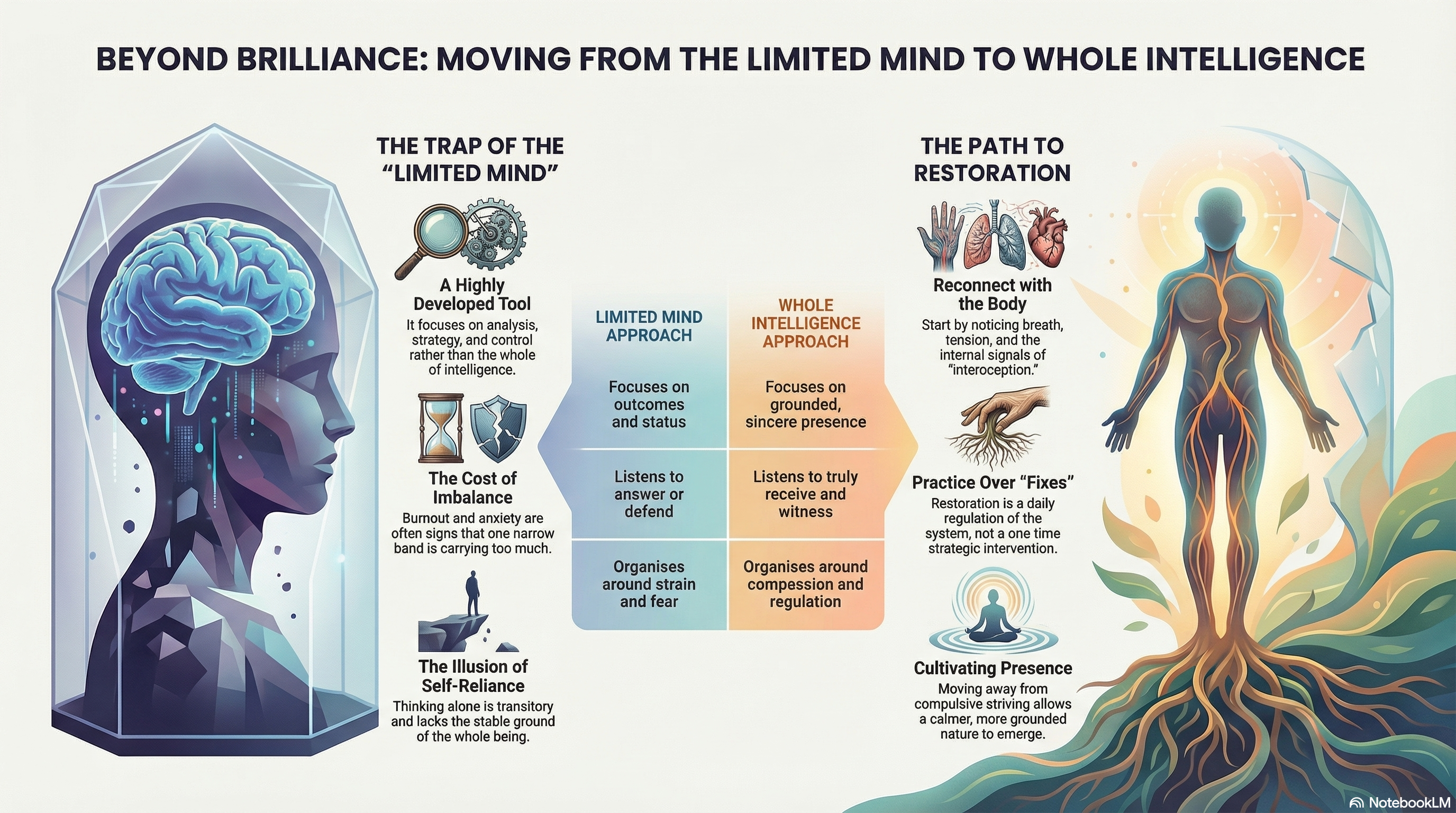
It is listening through the limited mind: the part of us that analyses, compares, judges, prepares, defends, categorises, and searches for the right answer. The limited mind is brilliant. We need it. It helps us navigate information, language, deadlines, systems, strategy, and the speed of modern work.
But the limited mind is not the whole human intelligence.
In Lodestone, whole-body listening begins when we stop treating listening as a head-based activity and begin to understand it as a full-body capacity. This is why in my AI Mirror work I describe the Unlimited Mind as spacious, vertical, calm, body-based, and living in “breath, heart, spine, whole-body listening.” The shift is not simply from distraction to attention. It is from narrow attention to embodied awareness.
Whole-body listening is not a technique. It is a state of reception.
It is the capacity to receive signals before the limited mind rushes in to label them.
It is what happens when the body is included in the act of knowing.

The body listens before the mind interprets
Before we understand the words someone is saying, the body is already registering signal.
It notices rhythm, pressure, tone, pace, facial movement, breath quality, posture, timing, pause, contraction, openness, and relational safety. It detects whether the person speaking is settled or hurried, congruent or strained, present or performing.
This does not mean we should start “reading” people in a simplistic way. Whole-body listening is not body-language decoding. It is not psychological interpretation. It is not an attempt to diagnose what someone “really means.”
That is still the limited mind trying to control the field.
Whole-body listening is different.
It asks:
What is happening in me as I listen?
Does my breath shorten?
Does my spine collapse?
Do I lean forward too quickly?
Do I tighten my jaw?
Do I prepare my answer before the other person has finished?
Do I lose the back of my body?
Do I become defensive, eager, pleasing, superior, impatient, or numb?
These are not character flaws. They are signals.
In Lodestone, we train people to hear these signals without shame. This is vital. The body is not accusing us. It is informing us.
Non-psychological listening: listening without invasion
One of the most important distinctions in my work is the difference between psychological listening and non-psychological listening.
Psychological listening tends to interpret.
It asks:
What does this mean about them?
What pattern are they revealing?
What wound is showing?
What diagnosis or category might explain this behaviour?
There may be professional settings where psychological frameworks are appropriate. But in ordinary leadership, facilitation, teaching, collaboration, and business communication, this kind of listening can easily become intrusive. It can turn another person into a project. It can make us feel clever rather than present.
Non-psychological listening does not invade the other person.
It listens from the whole body without rushing to interpretation.
It notices tone, breath, pace, silence, and the atmosphere of the exchange, but it does not seize ownership of the other person’s inner life. Instead, it begins with responsibility for one’s own state.
This is crucial in professional life.
A leader who cannot feel their own urgency will transmit urgency.
A facilitator who cannot feel their own defensiveness will shape the room defensively.
A mentor who cannot feel their own need to rescue may call it compassion.
A manager who cannot feel their own impatience may call it efficiency.
In Lodestone, listening begins with the self not because the self is more important than the other, but because the self is the instrument through which the other is received.
If the instrument is tense, rushed, collapsed, or over-identified with the limited mind, the listening will be distorted.
The physiology of whole-body listening
Whole-body listening is not merely poetic. It has a physiological basis.
The nervous system is continuously gathering information from inside the body and from the surrounding environment. The autonomic nervous system regulates functions that do not require conscious command, including heart rate, digestion, breathing patterns, and many aspects of physiological arousal. The parasympathetic branch is often associated with quiet “rest and digest” conditions, while the sympathetic branch is associated with mobilising energy for action, threat, or demand.
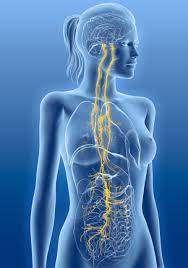
The vagus nerve is central here.
The vagus nerve, cranial nerve X, is the longest cranial nerve and has both sensory and motor functions. It travels widely through the body and is involved with the heart, lungs, throat, digestive system, and other organs. It is a major pathway of communication between body and brain, not simply a one-way command line from the brain downward.
This matters because whole-body listening depends on the body’s ability to receive and organise internal signals.
Research reviews describe vagal sensory neurons as innervating respiratory, cardiovascular, and digestive systems, and vagal pathways carry sensory information from internal organs toward the brain. In plain language: the body is constantly reporting upward. The brain is not listening alone. It is being informed by the body.
This is why I often say that the body tells the truth.
Not because the body gives us simplistic answers.
Not because every sensation should be obeyed.
Not because physiology replaces discernment.
But because the body registers conditions before the limited mind has organised a story around them.
The body often knows:
This is too much.
This is not safe yet.
This conversation is moving too fast.
I am performing.
I am abandoning myself.
I have lost my breath.
I need space.
I am not listening now; I am defending.
Whole-body listening begins when we can receive these signals without immediately suppressing, dramatising, or explaining them away.
The vagus nerve is not a trick. It is a relationship.
There is a danger in modern wellness culture of turning the vagus nerve into another hack.
“Tone your vagus nerve.”
“Activate your calm system.”
“Regulate yourself in thirty seconds.”
Some of these practices may be useful, but the Lodestone approach is different. I do not teach people to treat the vagus nerve as a button to press. I teach them to build a relationship with the living body.
The vagus nerve participates in the regulation of breath, voice, heart rhythm, digestion, and internal sensing. Its pathways are part of the physiological basis for why breath, posture, vocal tone, and inner state cannot be separated from communication. The vagus nerve carries visceral sensory information from organs including the lungs, heart, stomach, and intestines, and these signals contribute to internal regulation and perception.
This is why listening changes when the breath changes.
A person who is holding the breath is not listening in the same way as a person whose breath is available.
A person whose spine has collapsed is not receiving the room in the same way as a person whose spine is quietly lengthened.
A person whose chest is defended, whose throat is tight, or whose jaw is locked is not hearing only with the ears. Their whole system is participating in the act of reception.
In Lodestone, the vagus nerve is not isolated from the rest of the human being. It is understood as part of a living network: breath, heart, lungs, gut, voice, spine, pelvis, awareness, and spirit.

Listening through the four Lodestone compasses
The Lodestone Method works through the body as an intelligent field.
It is not a mindset system.
It is not a productivity method.
It is not a psychological model placed on top of the body.
It is a way of returning to the body’s own architecture of direction.
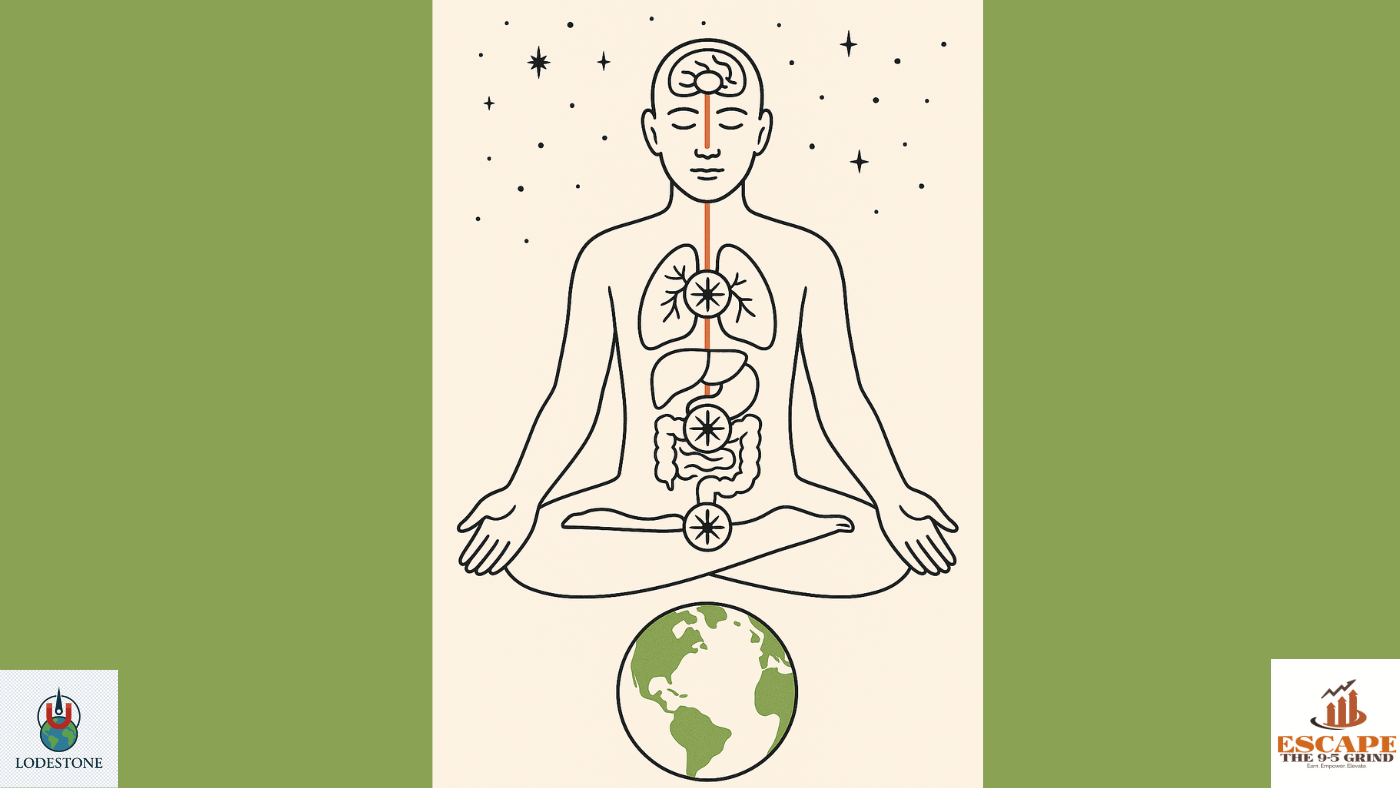
The four compasses are:
Compass 1: Brain, brain stem, and pineal gland
This is where many people over-identify with thought, language, analysis, memory, and mental pressure. In whole-body listening, this compass is not rejected. It is softened and returned to its proper role. The limited mind becomes a servant, not the sovereign.
Compass 2: Heart and lungs
This is the central field of breath, relationship, rhythm, grief, courage, receptivity, and embodied compassion. Listening deepens when the heart and lungs are included. We stop listening only for information and begin listening for the living signal beneath the words.
Compass 3: Solar Plexus
Located above the gut at the base of the breast bone, this compass is connected with power, pressure, self-trust, assertion, and embodied clarity. Many professionals listen poorly because they are either collapsed here or overdriving from here. Whole-body listening restores a steadier relationship with agency.
Compass 4: Base Chakra
This is the ground of survival, belonging, gravity, safety, and Earth relationship. Without this compass, listening becomes ungrounded. We may become mentally clever but physically absent. The base gives weight to presence.
The vagus nerve moves through this territory as part of the body’s regulation and communication system. But Lodestone does not reduce the human being to nerve pathways. The physiology matters because it gives us a grounded explanation for what spiritual and embodied traditions have long known: listening is not located in the ears alone.
Whole-body listening in professional life
In organisations, people often believe they are listening because meetings are full of words.
But a meeting full of words may contain very little listening.
People may be waiting to speak.
Performing agreement.
Managing impressions.
Scanning for danger.
Suppressing disagreement.
Rushing to solutions.
Avoiding silence.
Hiding confusion.
Deferring to authority.
Over-explaining to feel safe.
This is why Lodestone Inside treats whole-body listening as a professional capacity, not a private wellness preference.
When whole-body listening is absent, organisations lose signal.
They miss early signs of burnout.
They miss hesitation in the room.
They miss embodied dissent.
They miss the difference between compliance and consent.
They miss the person who has stopped speaking because the system has trained them not to trust their own signal.
Whole-body listening restores the field.
It allows people to notice not only what is said, but what happens to the human system while it is being said.
In my AI Mirror and Human Capacity work, I frame this as the development of attention, regulation under pressure, language precision, and participation quality. The aim is not personal processing for its own sake. The aim is cleaner contribution, clearer wording, steadier participation, and better shared sense-making.
This is deeply practical.
A team that can pause for ten seconds before reacting may make better decisions.
A leader who can feel urgency in the body may avoid transmitting panic.
A facilitator who can sense when language is heating the room may restore precision.
A professional who can notice self-abandonment early may set a boundary before resentment forms.
These are business capacities.
They are also human capacities.
The role of breath: the first doorway back
In Lodestone, breath is always woven through the work because breath is the simplest doorway back into embodied presence.
In Embodied Compassion for Professionals, I describe breath as the most intimate relationship we have with life itself: an ongoing exchange between body and Earth. The course begins with gratitude for breath because returning to breath is returning to embodied awareness rather than mental effort.
This is not breath control in the crude sense.
Many people try to use breath as another tool of domination:
Breathe this way.
Regulate now.
Calm down.
Perform serenity.
But the body does not respond well to being bullied into calm.
In Lodestone, breath is approached as relationship.
Can I notice the breath before I change it?
Can I follow it rather than force it?
Can I feel where it moves and where it does not?
Can I allow the back of the body to receive breath?
Can I let the out-breath soften the system by two or three percent?
Even a small shift matters.
When the breath becomes available, the body receives more information. The spine can lengthen. The eyes can soften. The jaw can release. The heart-lung field can become more receptive. The limited mind no longer needs to grip everything so tightly.
This is the beginning of listening.
Awareness is not thinking about yourself
A common misunderstanding is that awareness means self-analysis.
It does not.
Awareness is not thinking about your body.
Awareness is not narrating your emotions.
Awareness is not constructing a psychological explanation for every sensation.
Awareness is direct contact.
In the Lodestone practice of Kizuku, awareness means waking up to what is happening before the pattern takes over. Kizuku is not passive noticing. It is an embodied awakening: the moment we realise that something essential has been overlooked while our attention has been directed elsewhere.
This is why whole-body listening is non-psychological.
It is not:
“What is wrong with me?”
“What trauma does this represent?”
“What does this person’s posture mean?”
“What should I do with this feeling?”
It is much simpler and much more radical:
“What is here right now?”
Tight chest.
Shallow breath.
Soft belly.
Warm hands.
Racing mind.
Clear spine.
Heavy pelvis.
Open heart.
No words.
Resistance.
Space.
This is enough.
From here, choice can return.
Why whole-body listening protects against burnout
Burnout rarely begins at the moment of collapse.
It begins much earlier, when the body’s signals are ignored.
The body says: slow down.
The limited mind says: later.
The body says: this is too much.
The limited mind says: everyone else is coping.
The body says: breathe.
The limited mind says: finish the task first.
The body says: speak truth.
The limited mind says: stay agreeable.
The body says: rest.
The limited mind says: prove your worth.
Over time, the signals become harder to hear.
This is why whole-body listening is a burnout-prevention practice. It restores the relationship before breakdown becomes necessary.
In professional settings, this matters enormously. Many high-performing people are not lacking motivation. They are lacking inner reception. They have become so identified with output that they can no longer hear the body’s early warnings.
Whole-body listening gives them a way back.
Not through collapse.
Not through self-pity.
Not through dramatic reinvention.
Through one honest moment of contact.
Breath.
Spine.
Heart.
Solar plexus.
Base.
Gravity.
Signal.
A simple whole-body listening practice
This practice can be used before a meeting, during a difficult conversation, after receiving criticism, or whenever you notice yourself becoming rushed, defensive, foggy, or over-identified with thought.
1. Soften the eyes
Let the gaze broaden. Do not stare. Allow the room to come to you.
2. Lengthen the spine
Do not force posture. Let the spine become available, as though the crown of the head is gently lifting and the base of the body is supported by gravity.
3. Feel the back of the body
Bring awareness behind the heart, behind the ribs, behind the lungs. Most modern attention is forward-facing. Whole-body listening restores the back body.
4. Notice the breath
Do not improve it. Do not perform calm. Simply notice: is the breath shallow, held, pushed, smooth, broken, easy, or barely perceptible?
5. Ask: “What is here right now?”
Not “what is wrong?”
Not “what should I do?”
Not “how do I fix this?”
Just: what is here?
6. Listen from the whole body
Let the next words arrive from a wider field than the limited mind.
Sometimes the answer will be silence.
Sometimes a clearer question.
Sometimes a boundary.
Sometimes an apology.
Sometimes a decision not to decide yet.
That is listening.
The future of leadership depends on reception
We live in a time of enormous output.
More content.
More meetings.
More messaging.
More AI-generated language.
More speed.
More pressure to respond.
But human beings do not become wiser simply because more words are produced.
The future of leadership will depend not only on intelligence, but on reception.
Who can hear what is actually being said?
Who can sense when a room is no longer present?
Who can pause before urgency becomes harm?
Who can distinguish signal from noise?
Who can remain grounded when language accelerates?
Who can listen without invading, fixing, performing, or collapsing?
This is the work of whole-body listening.
It is also the work of Lodestone Inside.
Because the body is not separate from leadership.
It is not separate from communication.
It is not separate from decision-making, presence, compassion, timing, boundaries, or trust.
The body is part of the intelligence system.
When we listen with the whole body, we do not abandon the mind. We restore it to proportion.
The limited mind becomes clearer because it is no longer alone.
The heart becomes available.
The lungs become available.
The spine becomes available.
The solar plexus becomes available.
The base becomes available.
The vagus nerve, breath, voice, and body signals become part of the field of knowing.
And from that field, professional life can become less reactive, less performative, and more deeply human.
Whole-body listening is not softness.
It is disciplined reception.
It is the foundation of embodied presence.
And in a world overwhelmed by noise, it may be one of the most important professional skills we can now reclaim.