How Organisations Accidentally Create Burnout Risk | Lodestone Inside
Most organisations do not mean to create burnout risk.
But I have seen, over many years of mentoring, that they often build it unintentionally into the way people meet, communicate, decide, and carry pressure.
This matters to me because my work has always involved watching what strain does to human beings. I noticed it years ago in performers, students, and professionals long before I was using organisational language for it. When people are under too much pressure for too long, something narrows. Breath narrows. Listening narrows. Patience narrows. Their range as human beings begins to shrink.
In workplaces, that narrowing is often mistaken for a personal problem.
But very often, burnout risk is being created by ordinary organisational habits.
Too many heavy meetings.
Too much interruption.
Too little clarity about decisions.
Constant urgency.
A few good people quietly carrying more than they should.
Not enough real recovery.
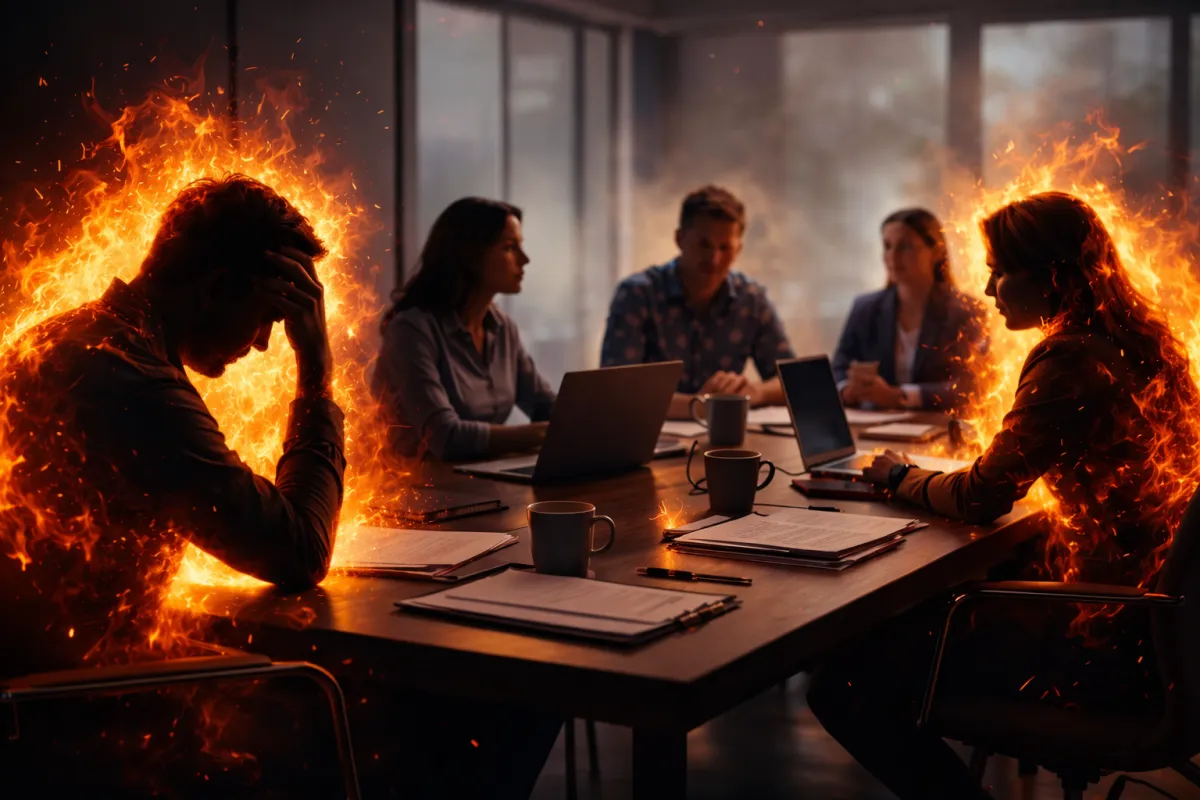
Each habit may look small on its own. Together, they create compression.
That is where burnout risk begins: not only in private stress, but in repeated patterns that ask people to function with too little room.
As a mentor, I am not interested only in helping people recover after the damage is done. I am interested in helping leaders notice what is creating the damage earlier.
One of the clearest places this happens is in meetings.
A meeting can drain more than time. It can drain attention, stability, and trust. When people leave meetings feeling talked over, burdened, unclear, or still stuck, that strain does not disappear. It accumulates.
This is one reason I developed ENZA.

ENZA is a clearer meeting and participation framework designed to reduce interruption, create more equal voice, and produce cleaner outcomes with less human strain. It helps change some of the everyday communication habits that quietly exhaust people.
I do not present ENZA as a cure-all. But I do see it as one practical way to prevent burnout risk being built into the ordinary working day.
Because prevention is not only about telling individuals to rest more. It is also about creating better conditions in which they do not have to keep overriding themselves just to cope.
The better questions for leaders are:
What are people being asked to carry here?
What are our meetings doing to them?
Where is strain being normalised?
Who is compensating quietly?
What would make this way of working less compressive and more sustainable?
Those are the questions that lead to better design.
And in my experience, better design is one of the most humane forms of leadership there is.
Find out more HERE.